🔥 One of Our Most Popular Galactic Gleam 35K Devices Is Now Just $11.49 — US Warehouse
Sign in
If you do not have an account, click Create AccountCreate Account
ARE YOU OF LEGAL SMOKING AGE?
Some items are no longer available. Your cart has been updated.


This discount code cannot be used in conjunction with other promotional or discounted offer.
On May 5, the U.S. Food and Drug Administration quietly added four new products to its short list of legal e-cigarettes. And for the first time, none of them are tobacco or menthol flavored.
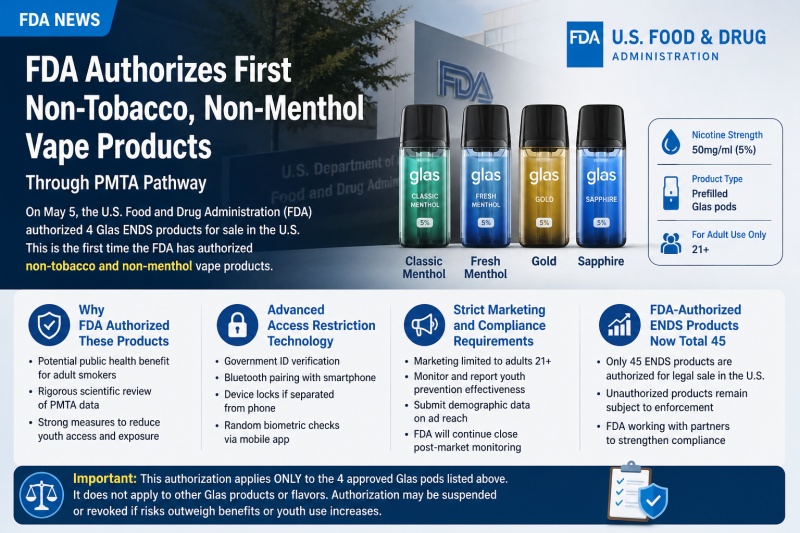
The authorized products are all from a brand called Glas – specifically, four nicotine pods:
Each contains 50mg/ml nicotine (that’s 5% strength).
With this move, the FDA has now given the green light to 45 e-cigarette products total through the PMTA (Premarket Tobacco Product Application) pathway since the process began.
The agency has been notoriously slow and cautious about approving anything outside traditional tobacco or menthol flavors. So why Glas?
The key, according to the FDA’s public statement, came down to two things:
The FDA’s reviewers concluded that while teens and young adults would likely fail these checks, most adults 21 and older could complete them without major issues.
The agency made one thing crystal clear: this is not an open door for every fruit, candy, or dessert-flavored vape out there. The authorization applies only to these four specific Glas pods. Any other flavored products – even from the same brand – remain unauthorized unless they go through their own rigorous review and meet the same standards.
To keep the authorization, Glas has to follow strict rules:
As of now, there are only 45 legal ENDS (Electronic Nicotine Delivery Systems) products on the FDA’s authorized list – all others on store shelves are technically illegal. The agency says it will keep enforcing against unauthorized products, including at borders and retail stores.
For adult smokers who’ve been looking for alternatives beyond basic tobacco or menthol, this could be a small shift. But the FDA is moving cautiously, one product at a time.
One thing’s for sure: getting a non-tobacco, non-menthol vape through the PMTA process is possible – but only with serious tech safeguards and solid public health data behind it.
Comment